Hanscom Air Force Base Military Defense Attorney
Expert Legal Counsel from a JAG OfficerThe program offices, engineers, and contractors who build and field the systems the Air Force depends on might still find themselves in a legal bind. A small uniformed population doesn’t mean small stakes: an investigation, a clearance suspension, or a hearing here can end a career just as fast as one at a base ten times the size.
Nelson Robles built his legal credentials alongside years of service as a Judge Advocate General’s Corps officer in the U.S. Army. That combination isn’t always easy to find for the airmen, Guardians, and families connected to Hanscom.
Uniform Experience, Applied to a Different Kind of Base
Nelson Robles spent years on active duty as an Army JAG Major, completing the Judge Advocate Officer Course, the Military Trial Advocacy Course, and the Complex Victim Unit Course, and earning the Army Commendation Medal and the Joint Service Commendation Medal. Hanscom doesn’t look like the installations where he served, but the Uniform Code of Military Justice doesn’t distinguish between an infantry post and an acquisition center — the same rules, the same exposure, and the same need for a lawyer who has actually worked inside the system.
Legal Matters Attorney Robles Handles at Hanscom
The Air Force Life Cycle Management Center runs its headquarters out of Hanscom, and MIT Lincoln Laboratory and MITRE operate major research campuses alongside it, putting a workforce of engineers, contractors, and program managers around a comparatively small population in uniform. That mix shapes what a Hanscom-connected legal matter tends to look like.

Nearly everyone stationed at Hanscom needs a clearance, and nearly every serious legal issue here eventually touches one. A suspension or revocation doesn’t just complicate a career for someone working nuclear command and control, cyber, or classified acquisition programs — it can end it outright, often faster than any court-martial would. Attorney Robles represents clients through DOHA hearings and clearance appeals before a suspension hardens into something much harder to undo.

The Air Force Office of Special Investigations covers Hanscom’s uniformed personnel, and a base built around classified programs doesn’t treat an accusation lightly, whatever it involves. Attorney Robles gives every client the same guidance regardless of the allegation: no statement, no interview, and no explanation without a lawyer present.
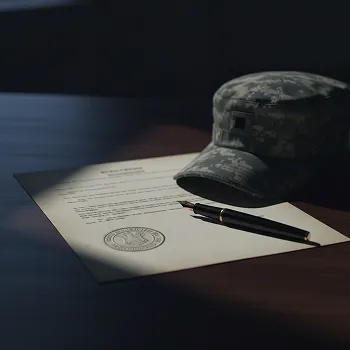
Non-judicial punishment gets sold as the quick, informal option, and on a smaller installation like Hanscom, word of an Article 15 travels through a tight-knit program office fast. The finding itself can still cost rank, pay, and standing heading into the next evaluation. Attorney Robles reviews the allegation, weighs accepting NJP against demanding a court-martial, and prepares whichever path makes sense.
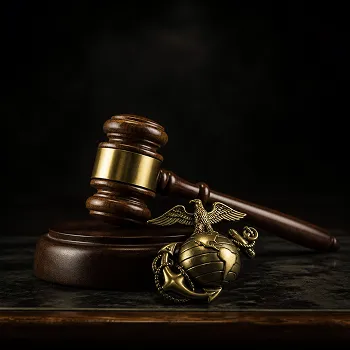
Hanscom’s uniformed population is small, but a court-martial convened here carries the same weight as one convened anywhere else in the Air Force — a dishonorable discharge, forfeiture of pay, and confinement at the general court-martial level. Attorney Robles represents clients from the Article 32 hearing through trial, and, when necessary, through an appeal to the Air Force Court of Criminal Appeals or the U.S. Court of Appeals for the Armed Forces.

Sexual assault allegations draw the same aggressive command attention at Hanscom as they would at any larger installation, and reputational harm can start well before a case is ever resolved. Attorney Robles conducts his own investigation and holds the government to its burden rather than accepting the initial account.
A Hanscom career can also unravel without ever reaching a courtroom or a clearance board. Attorney Robles represents clients in matters including:
- Involuntary separation and administrative discharge boards
- Reenlistment or re-commissioning bar challenges
- Record correction petitions before the Air Force Board for Correction of Military Records
- Evaluation report rebuttals
- Letters of reprimand and non-punitive counseling responses
- AWOL allegations
- VA disability appeals
- USERRA reemployment disputes
A Clearance Problem Doesn’t Wait for a Program Milestone
Life at Hanscom runs on acquisition schedules and program milestones rather than deployment cycles, but the legal deadlines attached to a case here aren’t any more forgiving because of it. A DOHA hearing, an Article 15 rebuttal, or a records-correction petition still moves on a short clock, and a suspended clearance can lock someone out of their own program office long before any hearing takes place. Getting a lawyer involved the moment an issue surfaces, rather than after a first interview, is usually what keeps the most options available.
Frequently Asked Questions
Serving Hanscom’s Military and Acquisition Community
Attorney Robles represents airmen, Guardians, veterans, and military families connected to Hanscom Air Force Base throughout Bedford, Lincoln, Concord, and Lexington, as well as the greater Boston area, and service members who have since transferred to installations elsewhere.