Fort Leonard Wood Military Defense Attorney
Expert Legal Counsel from a JAG OfficerThis rural Missouri post trains military police, engineers, and CBRN specialists from every service, not just the Army that runs it.
Nelson Robles co-founded Corrao & Robles Law after years as a Judge Advocate General’s Corps officer in the U.S. Army. He represents trainees, cadres, permanent-party soldiers, veterans, and families connected to Fort Leonard Wood, regardless of which branch sent them there.
Guidance for Every Branch
A case at a joint training installation can raise a question that never comes up at a single-service post: which command, and which branch’s procedures, actually apply. Nelson Robles built the foundation to sort through that as an active-duty Army JAG Major, completing the Judge Advocate Officer Course, the Military Trial Advocacy Course, and the Complex Victim Unit Course, and earning the Army Commendation Medal and the Joint Service Commendation Medal. That grounding in the UCMJ applies the same way to a Marine or a sailor training at Fort Leonard Wood as it does to a soldier.
Cases Attorney Robles Handles at Fort Leonard Wood
The Maneuver Support Center of Excellence runs three schools out of Fort Leonard Wood — Engineer, Military Police, and CBRN — training Army trainees through One Station Unit Training alongside sailors, airmen, and Marines assigned through their own services’ joint training detachments. That mix produces a caseload unlike almost anywhere else in the Army.

A Marine or sailor training at Fort Leonard Wood doesn’t stop answering to the Marine Corps or the Navy just because an Army command runs the post. An investigation can open with Army CID, NCIS, or Air Force OSI depending on the trainee’s parent service, and disciplinary authority can run through a joint training detachment rather than the Army chain most people assume is in charge. Attorney Robles sorts out which system actually applies before advising a client on anything, and gives every client the same starting instruction regardless: no statement, no interview, and no explanation without a lawyer present.
Failing a block of instruction at the Engineer, Military Police, or CBRN School doesn’t always mean a second chance. A trainee recycled for academic failure, injury, or a disciplinary flag can face separation from the very career field the training was supposed to lead to. Attorney Robles represents trainees facing recycle decisions, academic review boards, and MOS-reclassification actions connected to Fort Leonard Wood’s three schools.

Fort Leonard Wood’s command has taken a visible, public stance on trainee-cadre boundaries in recent years, and that stance means an accusation against a drill sergeant or instructor now draws fast, serious attention. Attorney Robles represents those facing these allegations, holding investigators to the same burden of proof and procedural protections that apply to any other accused service member.
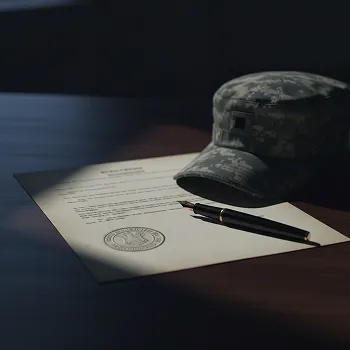
Non-judicial punishment moves through Fort Leonard Wood’s training pipeline quickly, and a finding can still cost a trainee or a permanent-party soldier rank, pay, and standing well beyond the current course. Attorney Robles reviews the underlying allegation, weighs accepting NJP against demanding a court-martial, and prepares the stronger case either way.
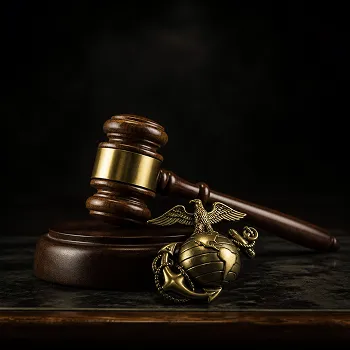
A general court-martial conviction carries a dishonorable discharge, forfeiture of pay, and years of confinement, whether the case originates in a training company, a joint service detachment, or a permanent-party unit. Attorney Robles represents clients from the Article 32 hearing through trial, and, when warranted, through an appeal to the applicable service Court of Criminal Appeals or the U.S. Court of Appeals for the Armed Forces.

Sexual assault and abusive sexual contact allegations receive command-level priority at Fort Leonard Wood, particularly given the installation’s recent focus on trainee safety, and reputational harm can begin well before a case is resolved. Attorney Robles conducts his own investigation and holds the government to its burden rather than accepting the initial account.
Plenty of career risk at Fort Leonard Wood never reaches a courtroom. Attorney Robles also represents trainees and permanent-party clients in:
- Entry-level and administrative separation boards
- Security clearance revocations and DOHA hearings
- Record correction petitions (ABCMR, BCNR, AFBCMR)
- Evaluation report rebuttals
- GOMOR and letter of reprimand responses
- AWOL and desertion allegations
- VA disability appeals
- USERRA reemployment disputes
OSUT Doesn’t Leave Room to Wait
One Station Unit Training compresses basic and advanced training into a single continuous course, and a pending legal matter doesn’t get its own pause built into that schedule. A trainee facing a recycle decision or a separation board can graduate, get held back, or wash out entirely before an appeal is even heard, and cadres facing an investigation can be reassigned while it’s still open. An Article 15 rebuttal or a clearance appeal still comes with a response window measured in days. Getting a lawyer involved as soon as an issue surfaces is usually what keeps the most options open.
Frequently Asked Questions
Serving Fort Leonard Wood’s Military Community
Attorney Robles represents trainees, cadre, permanent-party soldiers, veterans, and military families connected to Fort Leonard Wood throughout Waynesville and St. Robert, Missouri, as well as the greater Rolla area, and trainees from every branch who’ve since moved on to their next duty station.