Nelson Robles: JAG & Attorney Fighting for Fort Stewart Troops
Careers built over a decade of service can unravel from legal trouble in a single afternoon at Fort Stewart. A security clearance hearing that goes sideways. A court-martial panel that returns the wrong verdict. An Article 15 signed without understanding the fine print. Soldiers assigned to the 3rd Infantry Division’s armored brigades, aviators flying out of Hunter Army Airfield, and the sustainment troops who keep the division moving all operate under the same unforgiving standard, where one bad legal outcome can last a lifetime.
As one of the founding partners, Nelson Robles helped build Corrao & Robles Law around the idea that soldiers need a lawyer who’s actually worn the uniform. He now represents Fort Stewart personnel and veterans in court-martial defense, administrative proceedings, and the federal issues that can trail behind a military case.
The Advantage of Hiring an Attorney Who Wore the Uniform
Lawyers who never served typically learn the UCMJ the way they learned contracts or torts — out of a book. Nelson Robles learned it on active duty, as a JAG Major working the same investigations, hearings, and courtroom procedures that define military justice at installations like Fort Stewart. His training record includes the Judge Advocate Officer Course, the Military Trial Advocacy Course, and the Complex Victim Unit Course, and his service earned him the Army Commendation Medal and the Joint Service Commendation Medal. Clients benefit from a defense built on real operational knowledge, not secondhand research.
Comprehensive Military Justice Representation at Fort Stewart
Fort Stewart’s role as the primary home of the 3rd Infantry Division means a constant stream of military justice activity moves through the installation. Attorney Robles is available to soldiers and veterans connected to Fort Stewart for cases such as:
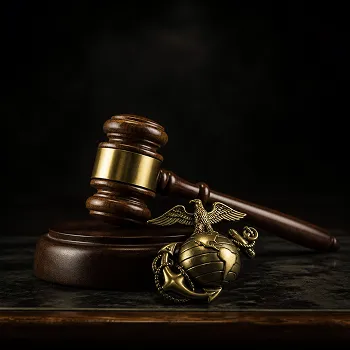
A general court-martial conviction can strip a soldier of rank, pay, and freedom through a dishonorable discharge and years of confinement; special and summary courts-martial bring their own consequences, even at a smaller scale. Attorney Robles gets involved from the Article 32 hearing forward, carrying a case through trial and, where the facts support it, an appeal to the Army Court of Criminal Appeals or the U.S. Court of Appeals for the Armed Forces.

An Army CID investigation can be well on its way before a soldier even suspects one exists. Talking to investigators without legal representation is a common and costly mistake. Attorney Robles works to intervene early, before a soldier says something that can’t be walked back later.
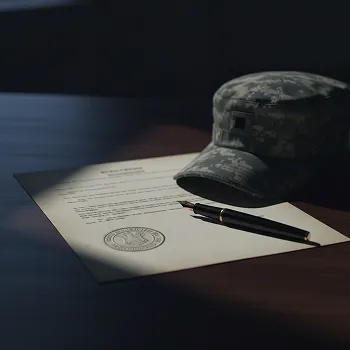
Soldiers are frequently told that accepting non-judicial punishment under Article 15 is the path of least resistance. That advice skips over the real cost: reduced rank, lost pay, extra duty, and a record that can haunt future promotion boards and reenlistment packets. Attorney Robles helps clients evaluate whether to accept NJP or fight the charge at a court-martial, and builds a mitigation strategy when the hearing proceeds.

Charges brought under Article 120 receive intense scrutiny from military prosecutors, and an accusation alone can do lasting damage regardless of the eventual outcome. Attorney Robles pursues an independent investigation into the facts and constructs a defense based on evidence rather than the presumption that often follows an allegation.
Plenty of career-ending decisions never reach a courtroom. Attorney Robles also represents Fort Stewart soldiers in:
- Boards of inquiry and involuntary separation actions
- Reenlistment bar appeals
- Security clearance revocations and DOHA proceedings
- ABCMR (Army Board for Correction of Military Records) filings
- Evaluation report rebuttals for officers and NCOs
- GOMOR (General Officer Memorandum of Reprimand) responses
- AWOL and desertion defense
- VA disability appeal representation
- USERRA reemployment disputes
The Clock Is Already Running
Deployment schedules and training rotations at Fort Stewart don’t leave much room for a case to sit. Witnesses ship out, physical evidence becomes harder to locate, and the response period for an Article 15, a clearance appeal, or an ABCMR submission is often shorter than soldiers expect. A missed deadline can mean losing a chance that will never come back around.
The same principle applies to any civilian exposure connected to a soldier’s time at Fort Stewart. Bringing in a lawyer before speaking with investigators tends to open up options that disappear once a case has been built unopposed.
Frequently Asked Questions
Serving the Fort Stewart and Hunter Army Airfield Community
Attorney Robles represents soldiers, veterans, and their families connected to Fort Stewart and Hunter Army Airfield throughout the Coastal Georgia region, including Hinesville, Richmond Hill, Pembroke, Ludowici, and Midway, as well as service members who have moved on to other duty stations.