Nelson Robles: Army JAG Officer Defending Soldiers Stationed at Fort Bragg
A single decision made in the hours after being questioned, or a single vote from a court-martial panel, can decide whether a soldier at Fort Bragg keeps the career, benefits, and reputation built over years of service. For paratroopers of the 82nd Airborne Division, operators within U.S. Army Special Operations Command, and soldiers across Fort Bragg’s many tenant units, the margin for error is thin, and the professional cost of getting it wrong can last for decades.
Attorney Nelson Robles, a founding partner at Corrao & Robles Law, represents soldiers and veterans connected to Fort Bragg in military justice proceedings and related federal and administrative matters. With experience as a U.S. Army Judge Advocate General’s Corps officer, Attorney Robles served inside the same chain of command, investigative process, and courts-martial system that now decides the outcome of his clients’ cases.
Why Soldiers at Fort Bragg Can Trust a JAG Officer for Legal Counsel
As an Army JAG Major, Attorney Robles has handled cases within the same military justice system that governs Fort Bragg. That firsthand vantage point carries directly into every case Attorney Robles takes. He’s completed advanced training including the Judge Advocate Officer Course, the Military Trial Advocacy Course, and the Complex Victim Unit Course, and holds decorations including the Army Commendation Medal and the Joint Service Commendation Medal. He pairs that institutional fluency with the meticulous preparation and courtroom presence that Fort Bragg’s highest-stakes military justice cases demand.
Military Justice Defense for Fort Bragg’s Soldiers
Home to the XVIII Airborne Corps, the 82nd Airborne Division, and the bulk of U.S. Army Special Operations Command, Fort Bragg moves soldiers through military justice proceedings at a scale few other installations match. Attorney Robles represents Fort Bragg-connected service members and veterans across the full range of military legal matters, including:
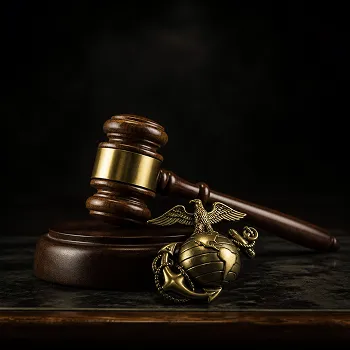
General courts-martial convened at Fort Bragg can impose a dishonorable discharge, total forfeiture of pay and allowances, and lengthy confinement, while special and summary courts-martial carry serious consequences of their own. Attorney Robles represents soldiers starting at the Article 32 preliminary hearing and continuing through trial and, where appropriate, appeal to the Army Court of Criminal Appeals and the United States Court of Appeals for the Armed Forces.

Army CID often moves quickly, sometimes opening an investigation before a soldier realizes one is underway. Getting an attorney involved before answering an investigator’s questions is an important decision. Attorney Robles works to step in at that earliest stage.
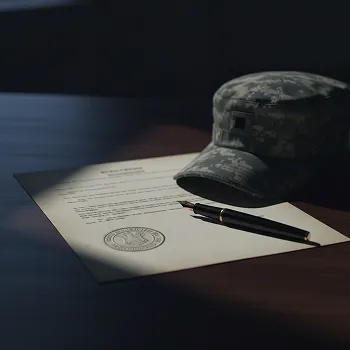
Commanders at Fort Bragg frequently resolve alleged misconduct through non-judicial punishment under Article 15, and soldiers are often told it is the simpler path to take. In practice, an Article 15 finding can mean reduced rank, forfeited pay, extra duty, and a permanent notation that follows a soldier through future assignments, promotion boards, and reenlistment decisions. Attorney Robles helps clients weigh whether to accept NJP or demand trial by court-martial, and builds the strongest possible mitigation case when proceedings move forward.

Article 120 allegations are prosecuted aggressively at Fort Bragg and can carry consequences reaching well beyond a court-martial verdict. Attorney Robles brings the same rigorous investigation, careful evidentiary review, and determined advocacy to sexual assault defense that these high-stakes cases require.
Beyond criminal and non-judicial proceedings, Fort Bragg soldiers face administrative actions that can end a career just as decisively as a conviction. Attorney Robles handles:
- Administrative separation boards and boards of inquiry
- Bar to reenlistment actions and challenges
- Security clearance revocations and DOHA hearings
- Army Board for Correction of Military Records (ABCMR) applications
- Officer and NCO evaluation report rebuttals
- General Officer Memoranda of Reprimand (GOMOR) responses
- AWOL and desertion charges
- VA disability claim denials and appeals
- USERRA reemployment rights violations
How Much Time Do You Have?
Fort Bragg’s operational tempo may work against soldiers under investigation. Units deploy, witnesses reassign, and evidence that could support a defense can disappear quickly. Deadlines to respond to an Article 15, appeal a security clearance revocation, or file an ABCMR application are frequently short, and missing one can permanently close a door that would otherwise have stayed open.
For soldiers facing potential civilian or federal charges connected to their time at Fort Bragg, the same urgency applies: involving defense counsel before making any statement to investigators, and before the government has built its case unchallenged, materially changing the options that remain available.
Frequently Asked Questions
Serving Fort Bragg and the Surrounding Communities
Attorney Robles represents soldiers, veterans, and families connected to Fort Bragg throughout the surrounding North Carolina communities — including Fayetteville, Spring Lake, Hope Mills, Raeford, Southern Pines, Pinehurst, Sanford, and Lillington — as well as service members later reassigned to installations elsewhere.