

Rhode Island Spring Cycling: Accidents & Your Legal Rights
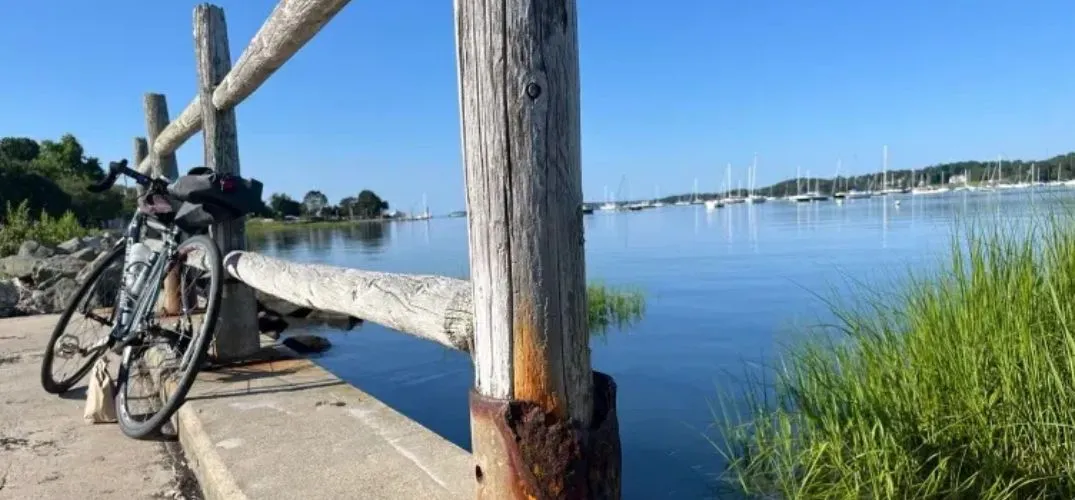
Rhode Island’s spring landscape is some of the most scenic in New England — from the East Bay Bike Path along Narragansett Bay to the Blackstone River Bikeway and the quiet roads of South County. Every April and May, thousands of Rhode Islanders dust off their bikes and take to the roads and paths. But with more cyclists comes more risk of accidents, and when a bicycle collides with a motor vehicle, it is almost always the cyclist who is seriously hurt.
At Corrao & Robles Law, we represent injured cyclists throughout Rhode Island and Massachusetts. We understand the unique legal challenges of bicycle accident cases and fight hard to make sure our clients receive the full compensation they are owed.
If you or a loved one was injured while cycling, contact us today for a free consultation.
The Scale of the Problem: Bicycle Accident Statistics
Before diving into Rhode Island law, it helps to understand how serious the national bicycle accident problem has become. According to the National Safety Council, 1,392 cyclists were killed in bicycle-related incidents in 2024 — a 37 percent increase over the last decade. The Consumer Product Safety Commission reports that emergency departments across the United States treated more than 454,000 bicycle-related injuries in 2024 alone.
According to the National Highway Traffic Safety Administration, 1,155 bicyclists were killed in motor vehicle traffic crashes in 2023 — accounting for 2.8 percent of all motor vehicle fatalities nationally. In 2023, an estimated 49,989 cyclists were injured in traffic crashes — a 28.6 percent increase from 2020.
Bicycle-related deaths consistently peak during the warmer months — starting in spring and reaching their highest levels through summer and early fall. April and May mark the beginning of the most dangerous period of the year for Rhode Island cyclists. Longer days bring more riders onto roads that drivers are not yet accustomed to sharing after months of winter. That combination is precisely why spring is when accidents spike.
Spring Cycling Hotspots and Hazards in Rhode Island
High-traffic roads in Providence and Warwick where bike lanes are narrow or non-existent create forced proximity between cyclists and motor vehicles. According to the Rhode Island Bicycle Coalition, cyclists in Rhode Island must ride as near to the right side of the roadway as practicable — but that protection disappears when roads are too narrow or poorly maintained.
Intersections where drivers turning right fail to yield to cyclists are among the most dangerous points on any cycling route. Studies consistently show that failure to yield the right of way is the most common cause of cyclist fatalities nationally — and Rhode Island’s urban intersections in Providence, Cranston, and Warwick concentrate this risk.
Route 1A and coastal roads in Newport and South Kingstown see significantly increased tourist traffic every spring. Drivers unfamiliar with local roads, distracted by the scenery, and unaccustomed to sharing narrow coastal lanes with cyclists create elevated crash risk across the entire South County and Newport regions.
Post-winter road damage is uniquely dangerous for cyclists. Potholes, frost heaves, crumbling pavement edges, and residual sand from winter treatment create hazards that can throw a cyclist off their bike entirely. Rhode Island winters are notoriously hard on road surfaces — and the damage accumulates in exactly the places cyclists are required to ride.
Dooring accidents — where a driver or passenger opens a car door into the path of an oncoming cyclist — are a significant and underreported hazard on Providence’s urban streets. Under R.I. Gen. Laws § 31-21-14, no person shall open the door of a motor vehicle available to moving traffic unless and until it is reasonably safe to do so. A driver who doors a cyclist in violation of this statute is liable for the resulting injuries.
Rhode Island Law and Bicycle Rider Rights
Rhode Island law is clear on the rights of cyclists. Under R.I. Gen. Laws Title 31, Chapter 19, cyclists on public roads have the same rights and responsibilities as motor vehicle operators. The Rhode Island Division of Motor Vehicles confirms that under state law, a bicycle is considered a vehicle with equal rights and responsibilities as other vehicles on the road.
The safe passing law is one of the most important protections Rhode Island cyclists have. State law requires drivers to pass cyclists by driving to the left at a safe distance sufficient to prevent contact if the cyclist were to fall into the driver’s lane — not less than three feet under any circumstance. A driver who buzzes a cyclist, forces them to swerve, or clips them while passing is presumptively negligent under this statute.
Rhode Island also enacted a vulnerable road user law in 2021 that provides enhanced penalties for drivers who fail to take due care and injure, severely injure, or kill cyclists and other vulnerable road users. This law significantly strengthens the legal position of injured cyclists in Rhode Island.
One important and often misunderstood fact: failing to wear a helmet as an adult is not considered negligence and is not admissible as evidence in a civil personal injury action in Rhode Island. If you were not wearing a helmet when you were hit, that fact alone cannot be used against you in your case.
Rhode Island’s Pure Comparative Negligence Standard
Rhode Island’s pure comparative negligence standard applies to all bicycle accident cases. A cyclist can recover compensation even if they were partially at fault — their recovery is simply reduced by their percentage of fault.
Insurance companies aggressively exploit this standard. Common tactics include arguing the cyclist was riding too far from the curb, was not using a light, failed to signal, or contributed to the collision in some other way. An experienced Rhode Island bicycle accident attorney knows how to anticipate these arguments, preserve the evidence needed to counter them, and keep your percentage of fault as low as possible.
The statute of limitations for bicycle accident cases in Rhode Island is three years from the date of the crash under R.I. Gen. Laws § 9-1-14. Missing this deadline results in permanent dismissal of your claim regardless of how strong the facts are. Contact an attorney promptly — the sooner an investigation begins, the stronger the evidence that can be preserved.
Common and Serious Injuries in Rhode Island Bicycle Accidents
When a bicycle collides with a motor vehicle, the cyclist has no steel cage, no airbags, and no crumple zones. The injuries cyclists sustain are frequently severe, often permanent, and sometimes fatal.
• Traumatic brain injuries occur in bicycle accidents even when a helmet is worn. TBI can manifest subtly — with symptoms that develop over days or weeks rather than immediately after the crash.
• Orthopedic injuries are among the most common we see. Broken clavicles, fractured wrists, femur fractures, and pelvis injuries all require surgery, lengthy recovery, and often result in permanent limitations.
• Road rash is frequently underestimated. Severe road rash can require skin grafting, carries serious infection risk, and can leave permanent scarring.
• Spinal cord injuries can result in partial or complete paralysis and are sometimes delayed in presentation — a key reason to seek immediate medical evaluation even when you feel okay.
• Internal injuries including organ damage are masked by adrenaline at the scene. Many cyclists believe they are fine immediately after a crash, only to discover hours later that something is seriously wrong.
Compensation Available to Injured Rhode Island Cyclists
Depending on the severity of your injuries, a Rhode Island bicycle accident claim may recover compensation for the following:
• Medical bills including ambulance transport, emergency room evaluation, orthopedic surgery, hospitalization, physical therapy, and all future medical treatment.
• Bicycle and equipment replacement including your helmet, cycling computer, and any other gear damaged or destroyed. Rhode Island does not cap personal injury damages.
• Lost wages during recovery and reduced earning capacity if injuries affect your ability to work in your current occupation or any other.
• Pain and suffering and loss of enjoyment of activities — including the inability to continue riding, exercising, or participating in activities that were part of your life before the crash.
• Emotional distress and PTSD. Post-traumatic stress following a bicycle accident is well-documented and legally recoverable in Rhode Island.
• Punitive damages in cases where the driver’s conduct was willful or reckless — such as a distracted driver who ran a red light or a driver who was intoxicated.
Special Cases: Dooring, Hit-and-Run, and Pothole Claims
Not every bicycle accident involves a straightforward collision. Several types of cases require specific legal knowledge.
• Dooring cases occur when a parked driver or passenger opens their door into a cyclist’s path. Rhode Island law prohibits this conduct specifically and liability is clear when the statute is violated.
• Hit-and-run accidents leave cyclists without an identified at-fault driver. Rhode Island cyclists can often pursue compensation through their own uninsured motorist coverage — a protection many do not realize they have through their personal auto insurance even when on a bicycle.
• Pothole and road defect cases hold municipalities liable when a known road hazard causes a crash. Rhode Island municipalities and RIDOT have a duty to maintain roads in a reasonably safe condition. However, injured cyclists must file a formal notice of claim with the municipality within just 7 days of the accident — one of the shortest deadlines in Rhode Island personal injury law. Missing this window can permanently bar your right to compensation.
What to Do If You Are Hit by a Car While Cycling in Rhode Island
1. Stay at the scene and call 911. A police report creates the official record of what happened and is critical to your case.
2. Photograph everything — the vehicle, license plate, road conditions, the scene from multiple angles, and your injuries immediately and in the days that follow.
3. Get the driver’s full information including name, license number, insurance company, and policy number.
4. Collect witness contact information from anyone who saw the crash or its immediate aftermath.
5. Do not sign anything or accept any payment the driver offers at the scene. Any agreement before you understand your full injuries can permanently limit your recovery.
6. Seek medical evaluation immediately — even if you believe you are okay. Internal injuries and concussions may not be immediately apparent.
7. Do not post about the accident on social media. Anything you publish can be used by the insurance company to minimize your claim.
8. Contact a Rhode Island bicycle accident attorney before speaking with the driver’s insurance company. Having an attorney from the outset changes what you can recover.
We Serve Injured Cyclists Across Rhode Island
Corrao & Robles Law represents bicycle accident victims in Providence, Warwick, Cranston, East Providence, Pawtucket, Newport, Johnston, North Providence, Woonsocket, and throughout Rhode Island and Massachusetts. Visit our bicycle accident attorney page to learn more about how we fight for cyclists.
We handle all bicycle accident cases on a contingency fee basis — you pay nothing upfront and nothing at all unless we secure compensation for you. There are no hourly fees, no retainers, and no costs to you unless we win.
If you or a loved one has been hit by a car while cycling in Rhode Island, do not wait. The attorneys at Corrao & Robles Law are available 24 hours a day, 7 days a week. Your consultation is free and there is no fee unless we win. Call or text us at (401) 854-1000 – Contact Us to schedule your free consultation and speak with one of our attorneys today.